Chinese Tea Ceremony
The Chinese tea ceremony is one of the most meaningful traditions you can include in your wedding day.
It is not simply a ritual—it is a moment to pause, acknowledge your parents and elders, and express gratitude for the love, guidance, and support that has brought you to this point.
In many ways, it marks a quiet transition: from being part of your family as children, to stepping forward together as a new family of your own.
Today, the ceremony typically honours both families, creating a shared moment of connection, respect, and unity.
-
Item descriptionThere is no single “right” time to hold a tea ceremony.
It is often shaped around the flow of your wedding day and what feels most natural for you and your families.
Common options include:
• The day before the wedding, as a private family gathering
• The morning or early afternoon on the wedding day
• Before the main ceremony, as a quiet and intentional moment
• During cocktail hour, allowing guests to observe
• During the reception, often before formalities or before dancing beginsWhat matters most is not the timing, but that the moment feels unhurried, present, and meaningful.
-
The tea ceremony can be held either in your home or at your wedding venue.
What matters most is creating a space where family can gather comfortably, and the moment can unfold with ease and intention.
Ideally, the setting allows for:
• Parents and grandparents to be seated comfortably
• A small table to hold the tea set, cups, and utensils
• Enough space for the couple to stand or kneel in front of their elders
• Access to electricity or hot water for preparing the teaThe setting does not need to be elaborate.
A simple, well-considered space—where everyone feels present and at ease—is more than enough.
-
The ceremony itself is simple in structure, but thoughtful in its preparation.
Most couples will organise:
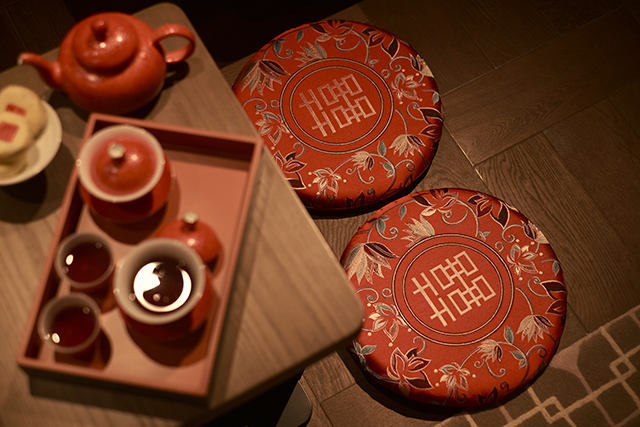
• A tea set, including a teapot and small cups
• Tea leaves (loose leaf is traditionally preferred)
• A source of hot water (such as a kettle or carafe)
• Seating for parents and elders
• Kneeling pillows (optional—some couples choose to stand and bow)
• A small table for the tea service
• Red envelopes or jewellery gifts from family members
• Traditional attire (optional), such as a qipao or cheongsamThe setting does not need to be elaborate—what matters is that it feels considered and respectful of the moment.
-
While each family may have its own variations, the structure of the tea ceremony is gently guided and easy to follow.
The couple typically begins by preparing the tea, creating a sense of intention and care.
Parents or elders are invited to sit, usually beginning with the groom’s family or, in some cases, grandparents as a sign of respect.
The couple then approaches together—either kneeling or standing—and offers tea to each family member in turn.
This gesture symbolises gratitude, respect, and the acknowledgement of family.
As the tea is received, parents or elders may offer a sip, share words of blessing, and present a red envelope or jewellery as a gesture of welcome and support.
The ceremony continues through each family member, creating a series of small, meaningful exchanges.
A Note on Guidance
While the tea ceremony is deeply traditional, it does not need to feel complicated or overwhelming.
Having someone guide the flow—whether a celebrant or a trusted family member—helps ensure that each step feels clear, calm, and well-paced.
When supported thoughtfully, the ceremony becomes what it is meant to be:
a grounded, heartfelt moment of connection between generations.
-
If you choose to include a tea ceremony as part of your day, I can guide the process in Mandarin, helping ensure the ceremony flows naturally while remaining respectful to tradition and meaningful to your family.
This allows you to stay present in the moment—without needing to think about what comes next.
-
The Chinese tea ceremony is a deeply symbolic moment—an expression of respect, gratitude, and the joining of families.
Delivered in Mandarin, this ceremony honours tradition while creating a calm, intentional space within your wedding day for connection, presence, and meaning.
Rooted in cultural significance, the tea ceremony offers a way to acknowledge parents and elders, express thanks, and mark the transition into marriage with humility and care.
I guide the ceremony with quiet structure and clarity—ensuring each step flows naturally, while allowing the moment to feel sincere and unforced.
Whether included as part of your wedding day or held as a separate gathering, the ceremony is approached with sensitivity to both tradition and your unique family dynamic.
Perfect for:
Couples who want to honour Chinese cultural traditions in a way that feels authentic, respectful, and seamlessly integrated into their wedding experience.
Includes:
• Delivery of the tea ceremony in Mandarin
• Guidance on ceremony structure, flow, and cultural elements - See more here
• Coordination of key participants (parents, elders, family members)
• Support to ensure each moment is understood and confidently deliveredPrice: $350
A ceremony that honours where you come from, and the families who shaped you.
-
For couples who would like a complete, ready-to-use setup, I can provide a thoughtfully styled tea ceremony arrangement.
Includes:
• Traditional tea set and tea
• Kneeling pillows for the couple
• Background banners or draped backdrop
• Tabletop styling for tea service and ceremonial snacksAdd-On Price: $230
Total with ceremony: $580
A complete setup that allows the moment to feel prepared, beautiful, and effortless.