Relationship Mastery
Together Begins is grounded in the belief that relationships truly begin with conscious commitment. Together Begins is best known as a celebrant practice, but its foundation has always been the belief that relationships extend far beyond the ceremony itself — love is not an event, but a continuing journey.
These courses are designed for couples and individuals who wish to strengthen their relational skills at any stage. They are not therapy or crisis-focused programs, but structured learning experiences that build communication, emotional awareness, and partnership capabilities.
The focus is simple: not repairing what is broken, but cultivating what allows relationships to thrive — because few investments carry greater lifelong value than the quality of our closest bonds.
In this course, you will build the essential foundations of a healthy, resilient, emotionally enriching relationship.
You will learn how connection works, why it sometimes breaks, and how to rebuild it through simple daily actions.
Focus: Core relational skills
Themes: Emotional safety, Love Maps, Love Languages, trust-building habits, gender intelligence (intro)
Purpose: Establish the psychological and behavioural foundations of healthy relationships.
Level: Entry-level / broadest audience
Format: ~5–7 hours (weekend-intensive equivalent)
In this course, you will develop the skills required to navigate tension, disagreement, and emotional friction with clarity and composure.
You will learn why conflict escalates, how reactions are triggered, and how to communicate in ways that reduce defensiveness and restore understanding.
Focus: Conflict navigation
Themes: Gottman conflict tools, IMAGO dialogue, emotional triggers, repair attempts, gendered conflict patterns
Purpose: Equip learners to handle tension constructively and de-escalate conflict.
Level: Intermediate
Format: ~6–8 hours
In this course, you will explore the conditions that allow relationships to feel secure, stable, and deeply supportive.
You will learn how trust is formed, how safety is reinforced or undermined, and how small relational patterns shape long-term connection.
Focus: Attachment and emotional pattern work
Themes: Attachment styles, childhood imprints, emotional wounds, advanced IMAGO practice, safety rebuilding
Purpose: Address deeper relational patterns and integrate emotional healing into partnership.
Level: Advanced / therapeutic growth (educational, non-clinical)
Format: ~8–10 hours

PAGE UNDER CONSTRUCTION - In this course, you will focus on sustaining depth, attraction, and partnership as relationships evolve over time.
You will learn how strong relationships adapt to change, maintain emotional closeness, and avoid the gradual drift that weakens many long-term bonds.
Focus: Meaning and long-term partnership architecture
Themes: Covenant, shared mission, rituals, agreements, responsibility, relational blueprint
Purpose: Help couples design a durable, purpose-driven long-term partnership.
Level: Integration / future-focused
Format: ~6–8 hours
Relationship Mastery courses focus on structured learning and practical skill development. For those drawn to the deeper ideas that shape commitment, connection, and long-term partnership, the Marriage & Meaning journal offers reflective essays exploring the psychological and relational dynamics of enduring relationships.

The Relationship Mastery Architecture
Foundations & Influences
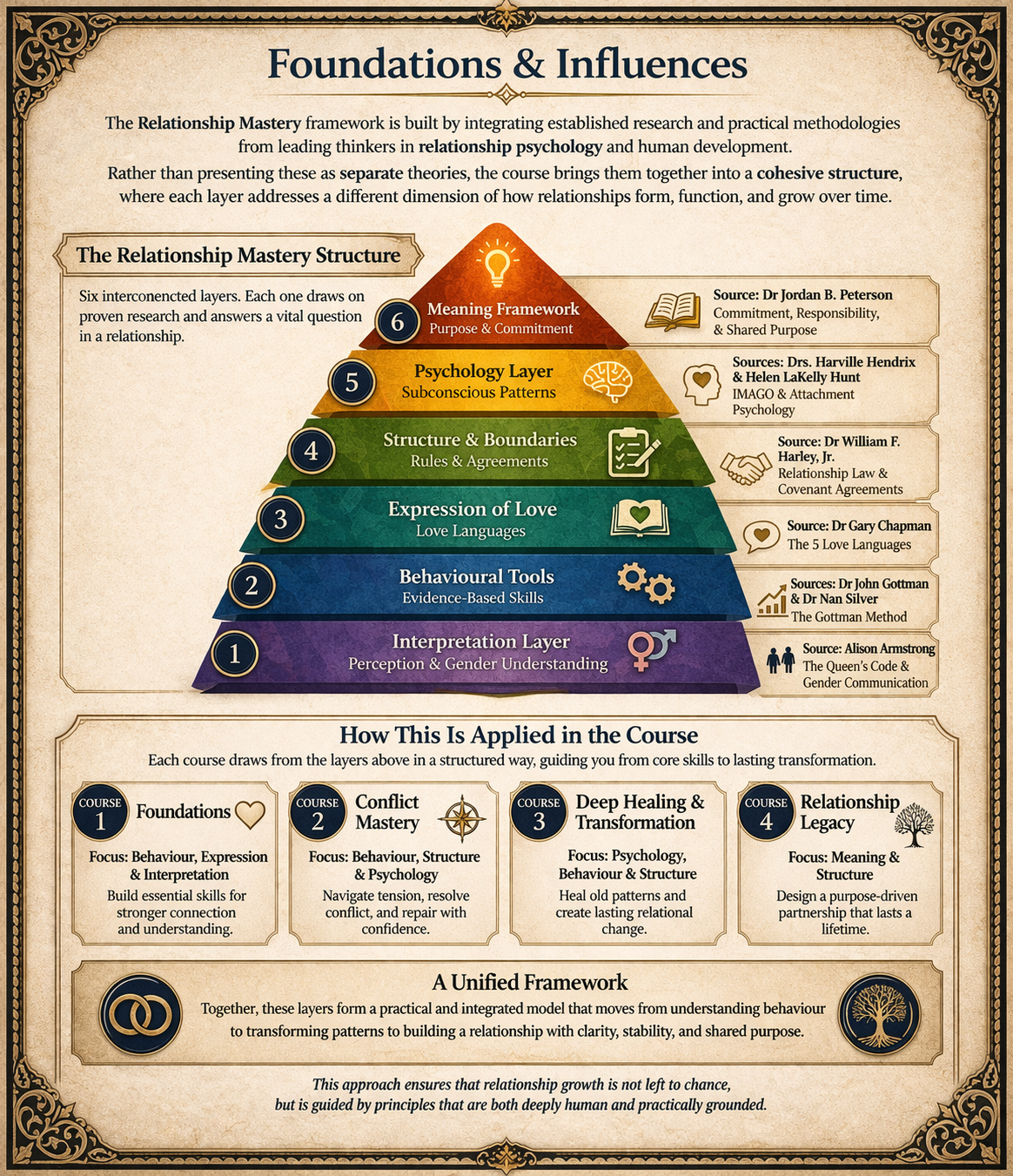
The Relationship Mastery Architecture is shaped by a deliberate effort to integrate and synthesise the work of leading thinkers in relationship psychology and human development.
This is not a collection of separate models, but an attempt to bring their insights into alignment—forming a structured framework that reflects how relationships actually develop, function, and evolve over time.
At its core is a guiding aim: to translate established knowledge into a cohesive system that is both deeply grounded and practically lived.
The Relationship Mastery Structure
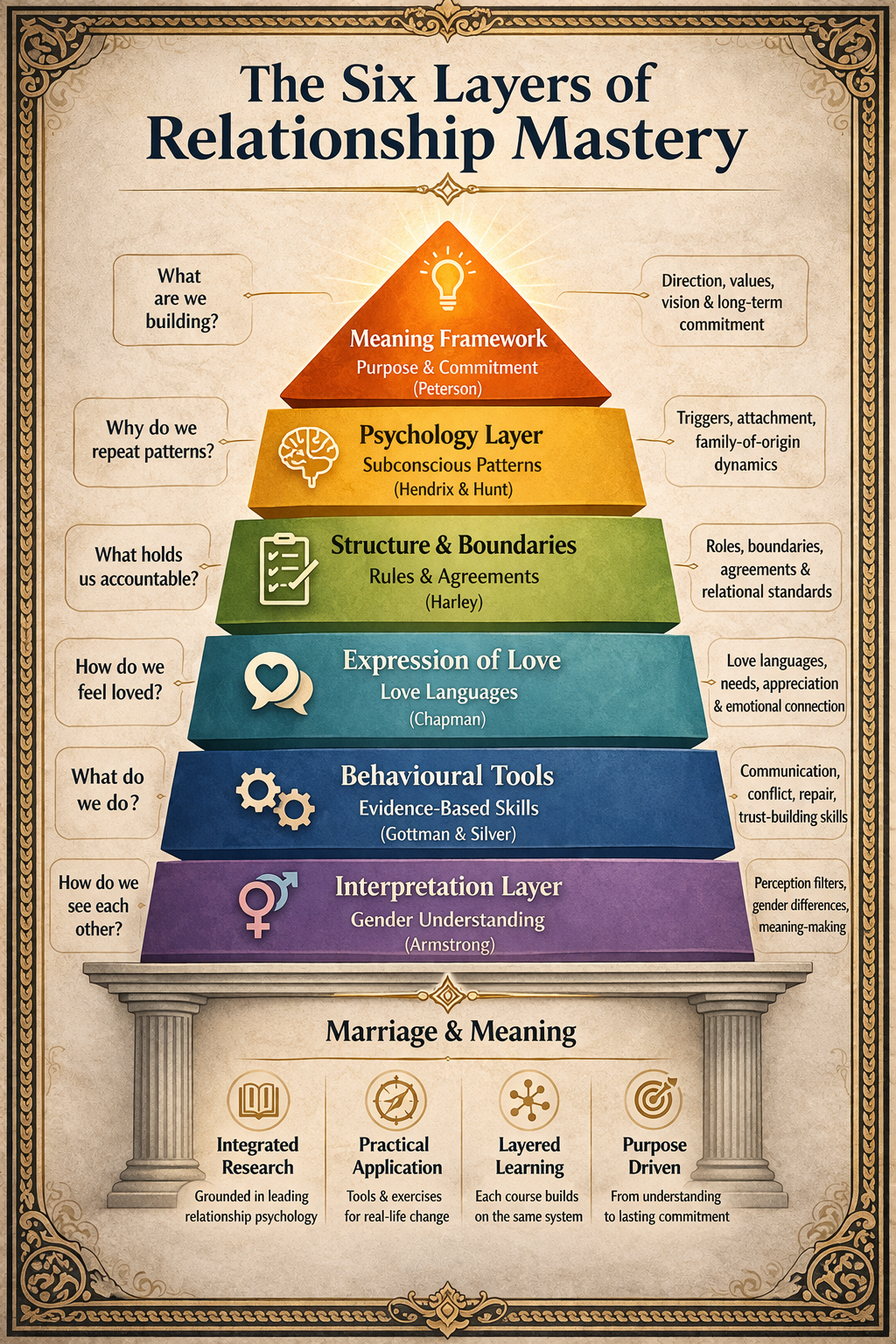
At its core, the framework is organised into six interconnected layers. Each layer answers a different question within a relationship:
-
Source influence: Alison Armstrong
Relationships are shaped by the meaning we assign to behaviour. This layer focuses on understanding differences—particularly in communication styles, emotional expression, and expectations—so that partners reduce misinterpretation and unnecessary conflict. -
Source influence: Dr John Gottman & Dr Nan Silver
This layer focuses on observable actions. It includes the habits, responses, and interaction patterns that either strengthen or erode a relationship over time. Practical tools such as repair attempts, emotional attunement, and conflict behaviours are grounded here. -
Source influence: Dr Gary Chapman
Love must be communicated in a way the other person can receive. This layer translates intention into impact, helping couples understand how appreciation, care, and connection are most effectively expressed and felt. -
Source influence: Dr William F. Harley, Jr.
Healthy relationships are not sustained by feelings alone. This layer introduces boundaries, agreements, and shared standards that create stability, reduce friction, and support long-term trust. -
Source influence: Drs. Harville Hendrix & Helen LaKelly Hunt
Many relational patterns are shaped long before the relationship begins. This layer explores subconscious dynamics, emotional triggers, and early attachment influences, reframing conflict as an opportunity for understanding and healing. -
Source influence: Dr Jordan B. Peterson
At the highest level, relationships are not just about connection—they are about direction. This layer focuses on commitment, shared purpose, and the long-term vision that gives the relationship depth and resilience over time.
How This Is Applied in the Course
Each course within Relationship Mastery draws from these layers in a structured way:
Course 1: Foundations
Focuses on Behaviour, Expression, and Interpretation to establish core relational skills.
Course 2: Conflict Mastery
Integrates Behaviour, Structure, and Psychology to help couples navigate tension and repair effectively.
Course 3: Deep Healing & Transformation
Focuses primarily on Psychology, supported by Behaviour and Structure, to address deeper relational patterns.
Course 4: Relationship Legacy
Builds on Meaning and Structure to help couples design a long-term, purpose-driven partnership.
Foundations of the Relationship Mastery Architecture
The Relationship Mastery Architecture is built through a deliberate integration and synthesis of established work across relationship psychology and human development.
Each body of work informs a distinct layer within the Relationship Mastery Architecture.
Dr John Gottman & Dr Nan Silver
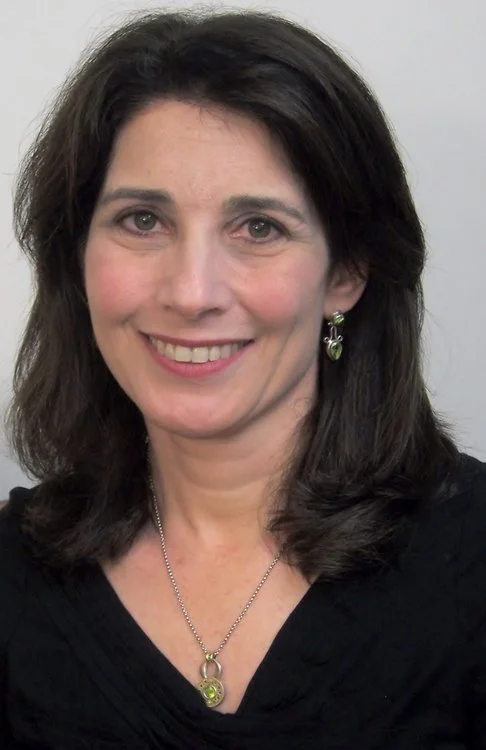
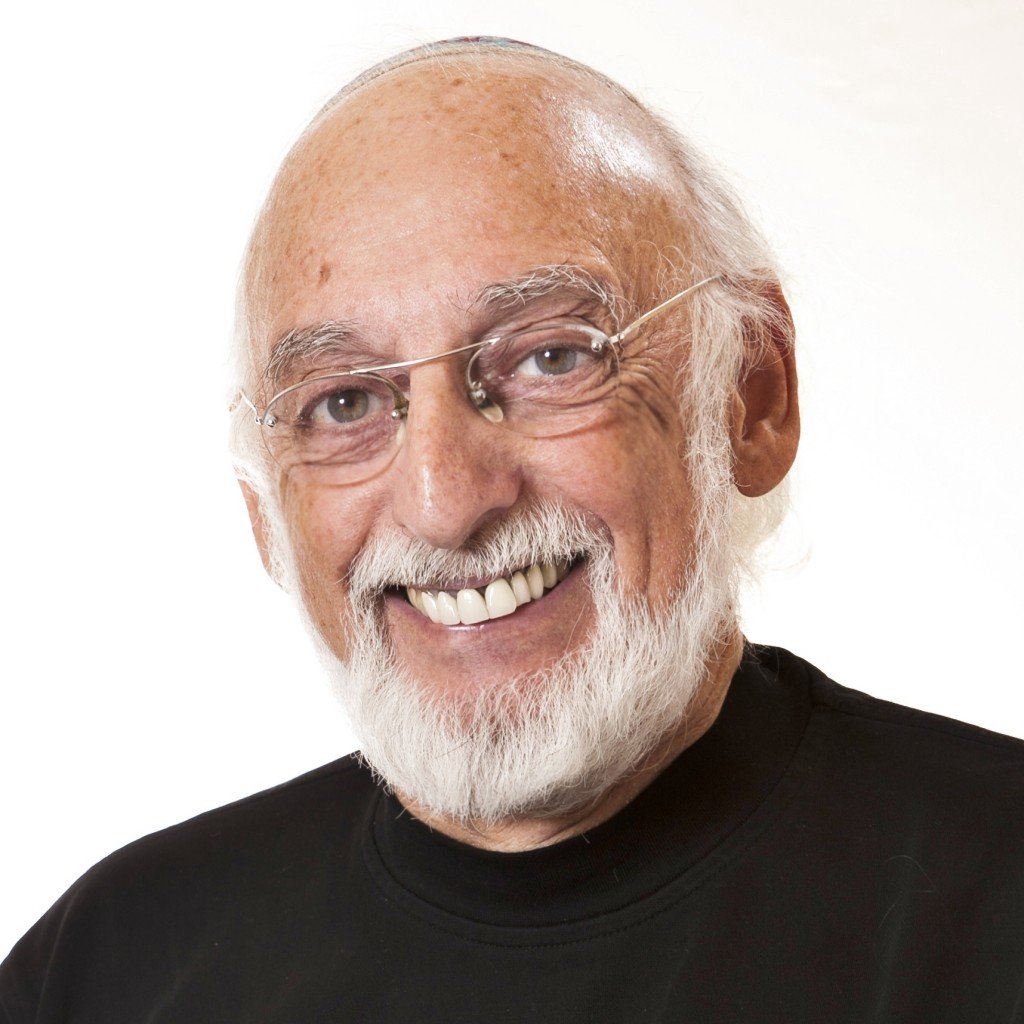
Behavioural Research & Relationship DynamicsDr John Gottman and Dr Nan Silver are known for their extensive research into relationship stability and breakdown. Their work identifies the observable behaviours and interaction patterns that shape long-term relationship outcomes. Within Relationship Mastery, their contributions form the foundation of practical relational skills, including communication, emotional attunement, and repair.
Dr Gary Chapman
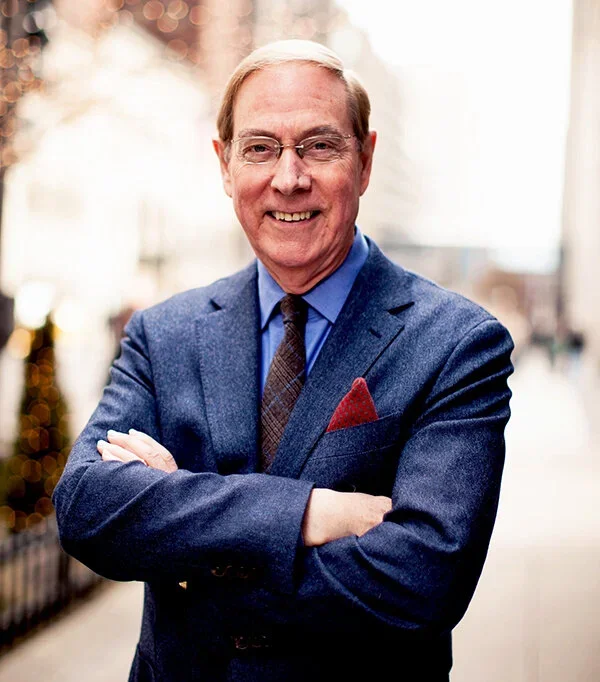
Emotional Expression & ConnectionDr Gary Chapman developed the concept of the Five Love Languages, highlighting how individuals give and receive love in different ways. His work emphasises that connection is not only about intention, but about how that intention is experienced. In this framework, his insights inform how appreciation, care, and emotional connection are expressed and understood.
Dr William F. Harley, Jr.
Structure, Boundaries & AgreementsDr William F. Harley, Jr. focuses on the role of structure, boundaries, and mutual agreements in sustaining healthy relationships. His work introduces the importance of shared expectations and behavioural standards that protect trust and reduce conflict. Within Relationship Mastery, this informs the development of clear relational agreements and long-term stability.
Dr Harville Hendrix & Dr Helen LaKelly Hunt
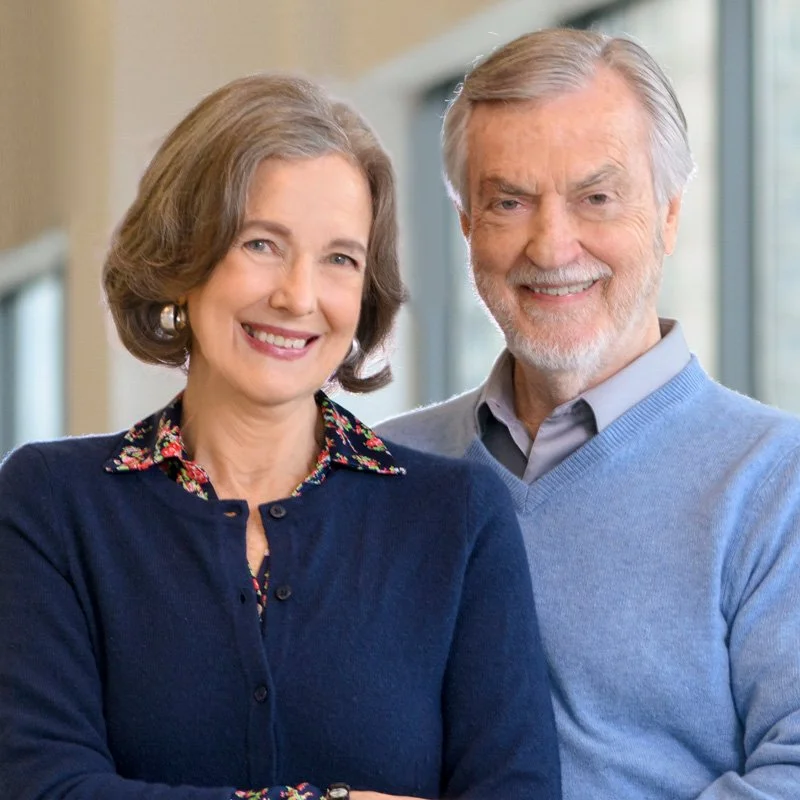
Subconscious Patterns & Relational PsychologyDr Harville Hendrix and Dr Helen LaKelly Hunt developed Imago Relationship Therapy, which explores how early life experiences shape adult relationship patterns. Their work reframes conflict as an opportunity to understand unmet needs and unconscious dynamics. In this framework, their insights support deeper awareness of emotional triggers and pathways for healing and growth.
Dr Jordan B. Peterson
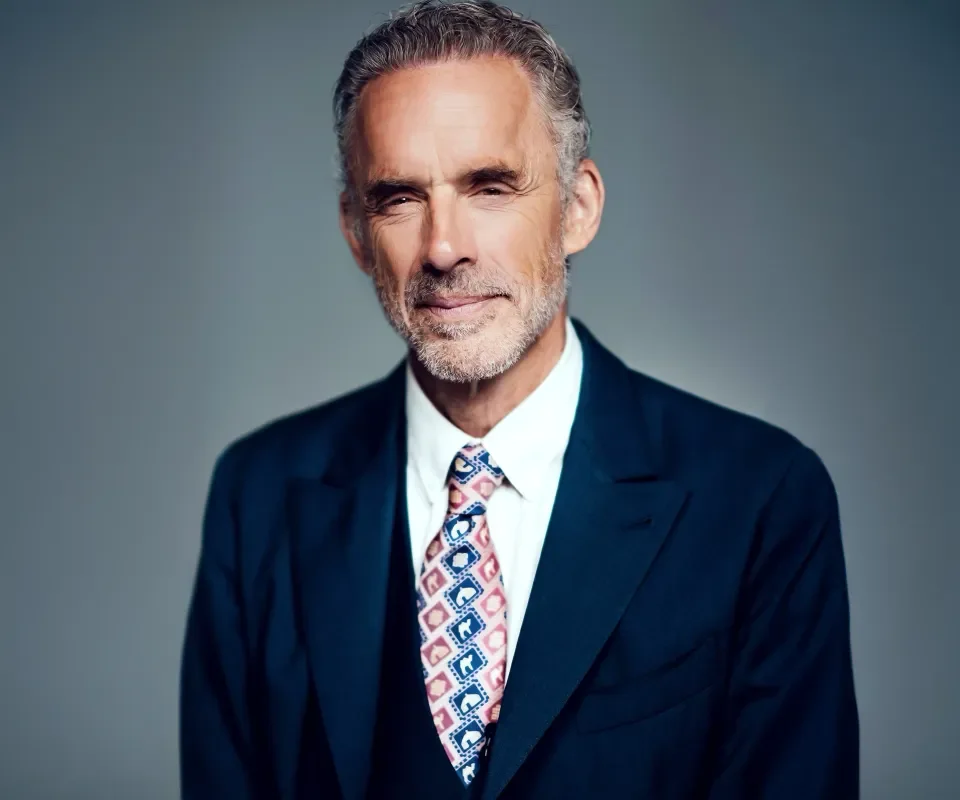
Meaning, Responsibility & CommitmentDr Jordan B. Peterson’s work explores meaning, responsibility, and the role of commitment in shaping a meaningful life. Applied to relationships, his perspective emphasises the importance of shared direction, personal accountability, and long-term purpose. Within Relationship Mastery, this informs the understanding of relationships as a path of development, not just connection.
Alison Armstrong
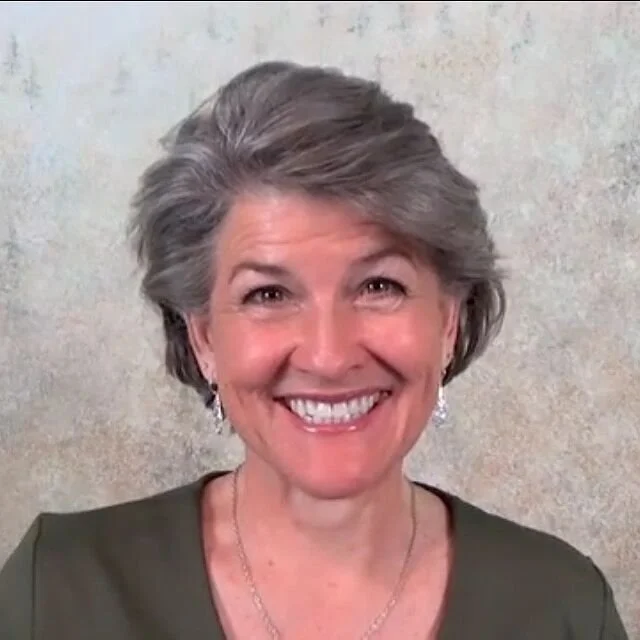
Interpretation, Gender Dynamics & PerspectiveAlison Armstrong’s work focuses on understanding differences in behaviour, communication, and perspective between men and women. Her insights help reframe common misunderstandings that often lead to conflict. Within this framework, her contributions support clearer interpretation, reduced miscommunication, and a more generous understanding of each partner’s intent.